

This post may contain affiliate links. Please read our disclosure policy.


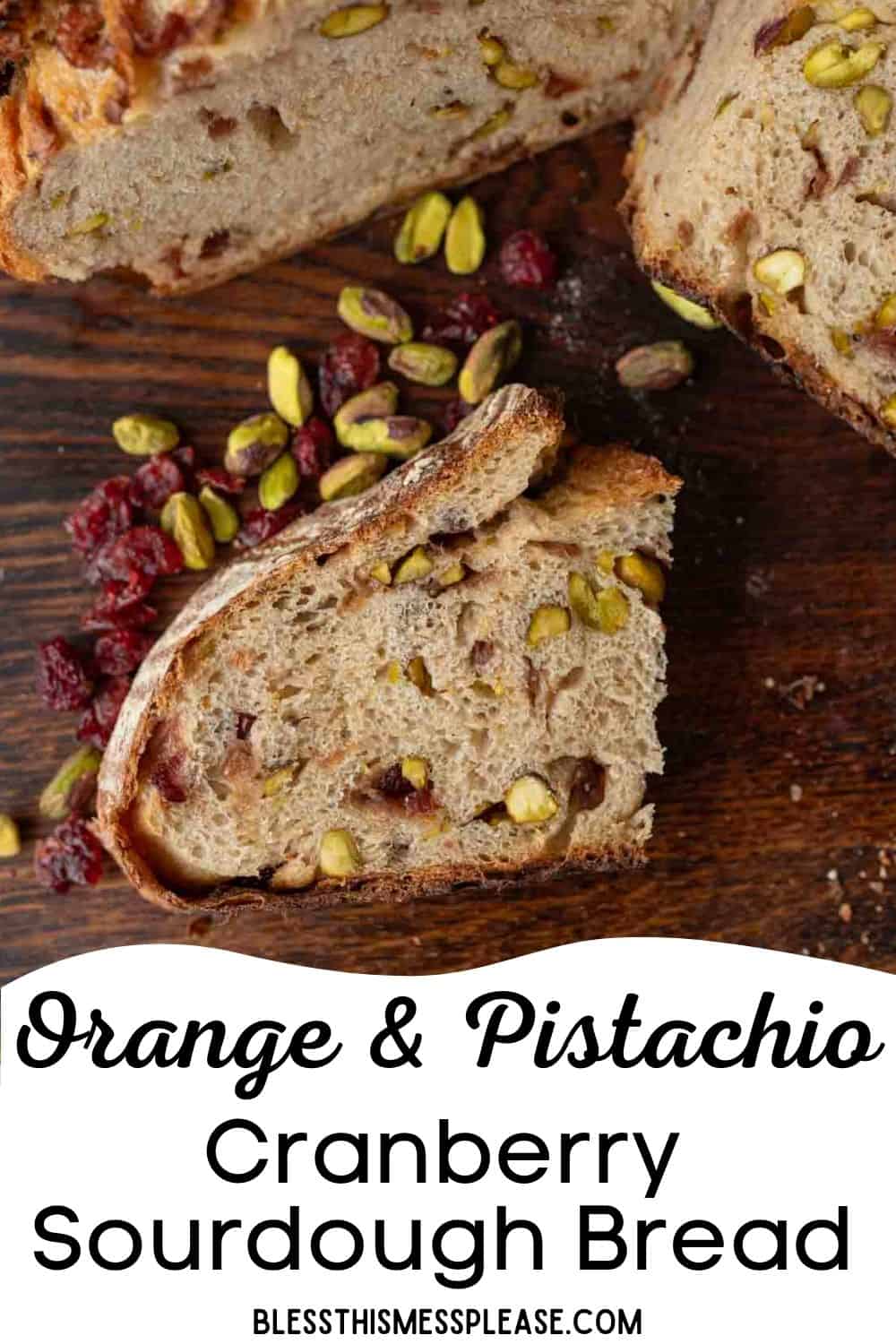
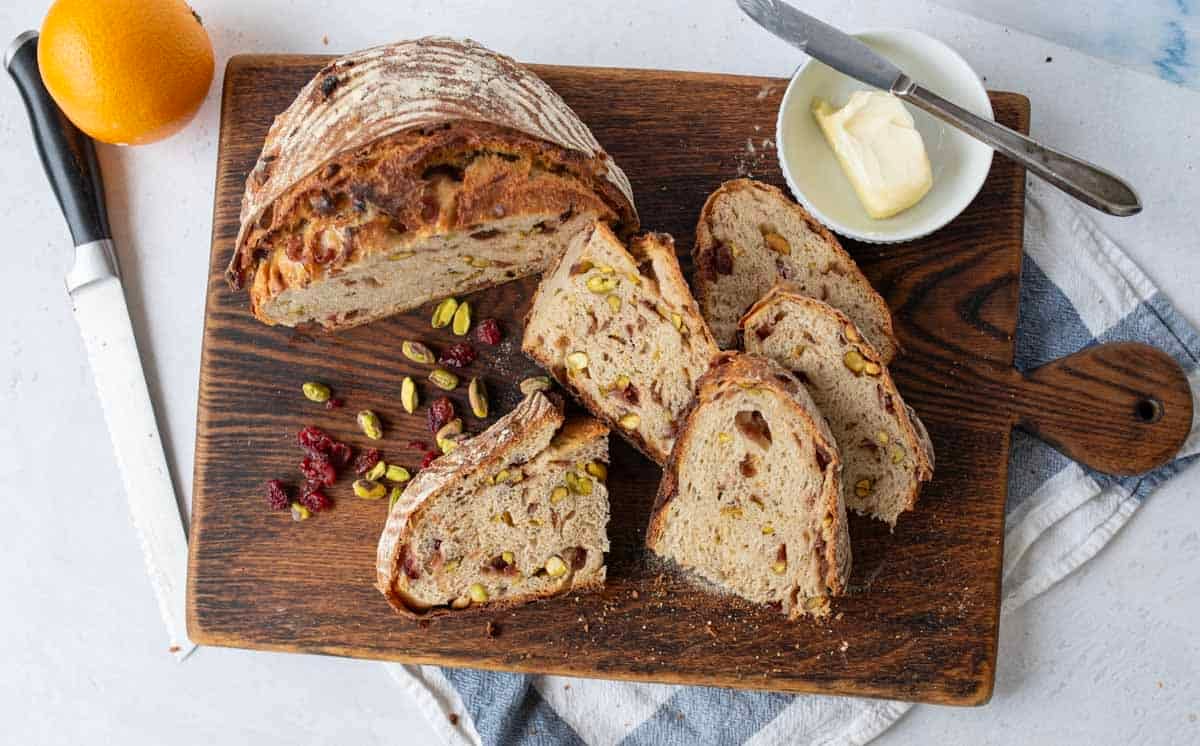
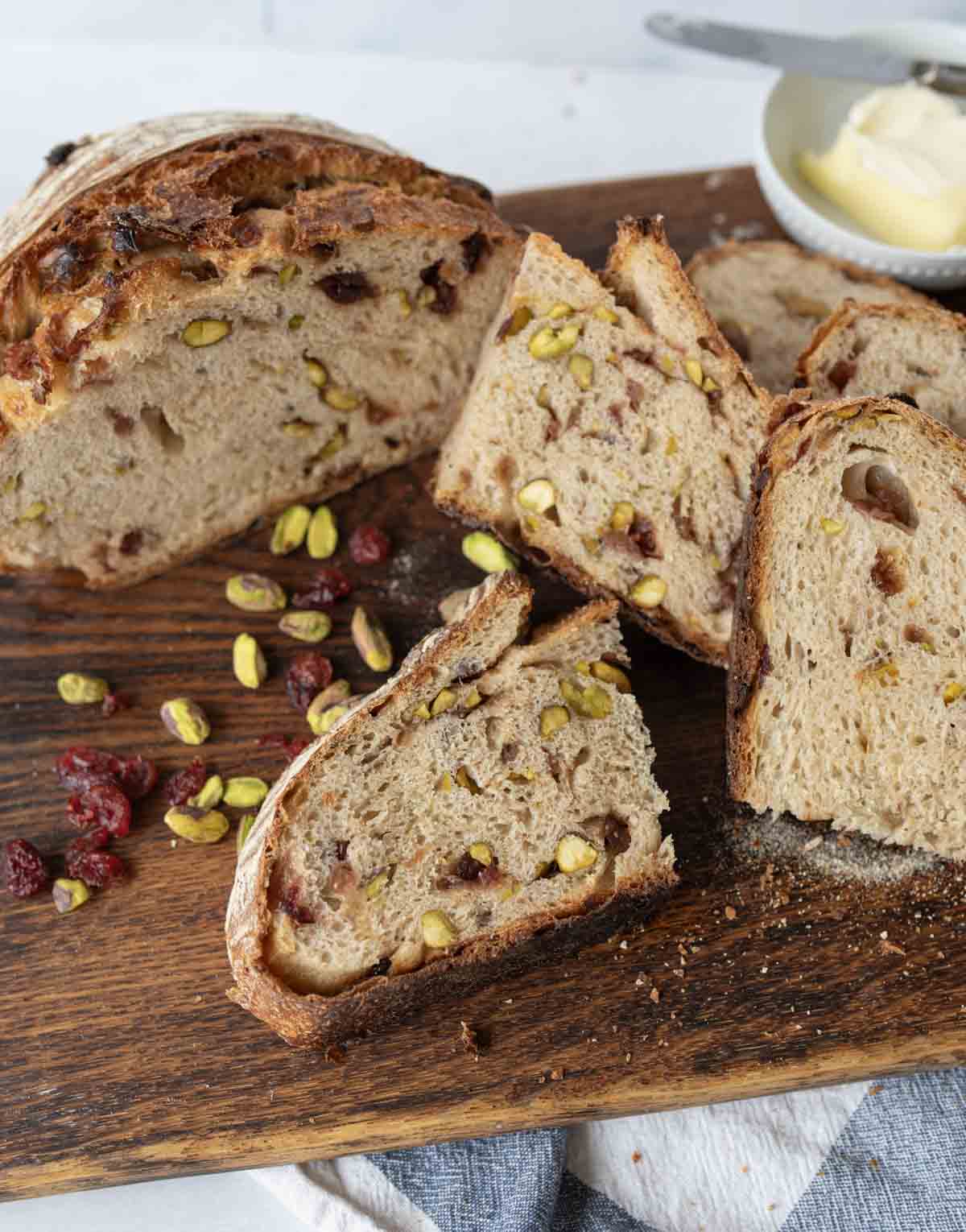
Learn how to make Cranberry Sourdough Bread with pistachios and orange zest. This festive loaf combines tangy sourdough starter with sweet dried cranberries, pistachios, and bright orange flavors for a stunning rustic loaf. Plus it’s absolutely perfect for the holidays.
Quick Recipe Overview
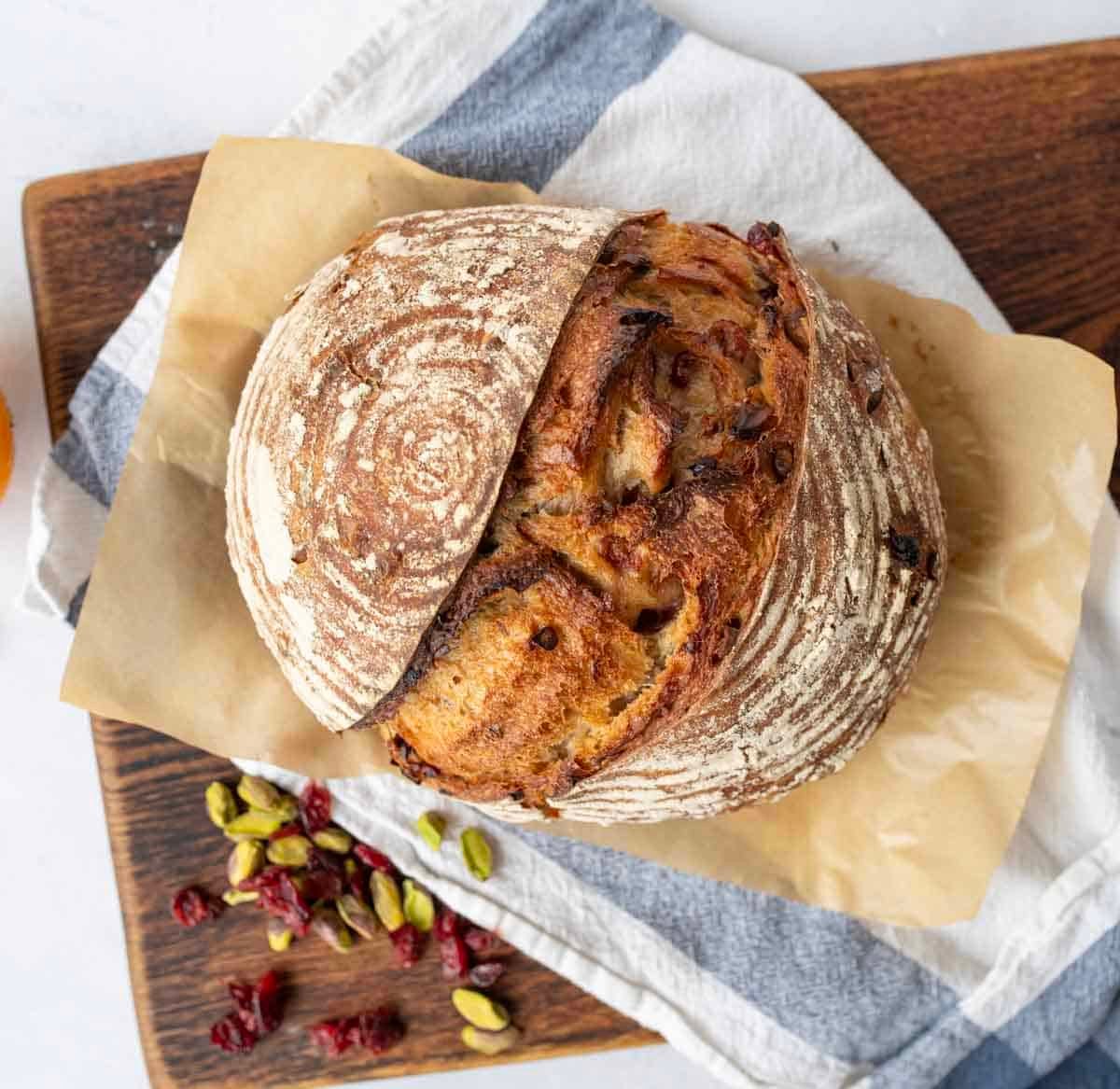
WHAT: Rustic artisan sourdough bread studded with tart dried cranberries, crunchy pistachios, and bright orange zest baked in a dutch oven.
WHY: Creates a stunning centerpiece loaf with incredible flavor balance—tangy sourdough, sweet cranberries, nutty pistachios, and citrus brightness all in one bite.
HOW: Mix whole wheat flour dough with active starter, fold in soaked fruit and nuts, let rise for several. hours at room temperature, shape, proof, and bake covered.
Table of Contents
- Quick Recipe Overview
- Why I Love Making Cranberry Sourdough Bread
- Ingredient Notes
- Orange Cranberry Sourdough Bread with Pistachios Recipe
- How To Make Cranberry Sourdough Bread
- Substitutions & Variations For Cranberry Sourdough Bread
- FAQs for Cranberry Orange Sourdough Bread
- My Best Tips for Making Cranberry Sourdough Bread
- What to Serve With Cranberry Sourdough Bread
- Storage, Reheating & Make-Ahead Tips For Cranberry Orange Sourdough Bread
- Similar Yummy Sourdough Recipes
- More Comforting Sourdough Recipes To Try
Why I Love Making Cranberry Sourdough Bread
This cranberry sourdough bread has become a new favorite during the holidays, but honestly, I plan on baking it year-round whenever I want something special. The combination of tart cranberries, buttery pistachios, and fresh orange zest transforms a classic sourdough loaf into something truly delightful!
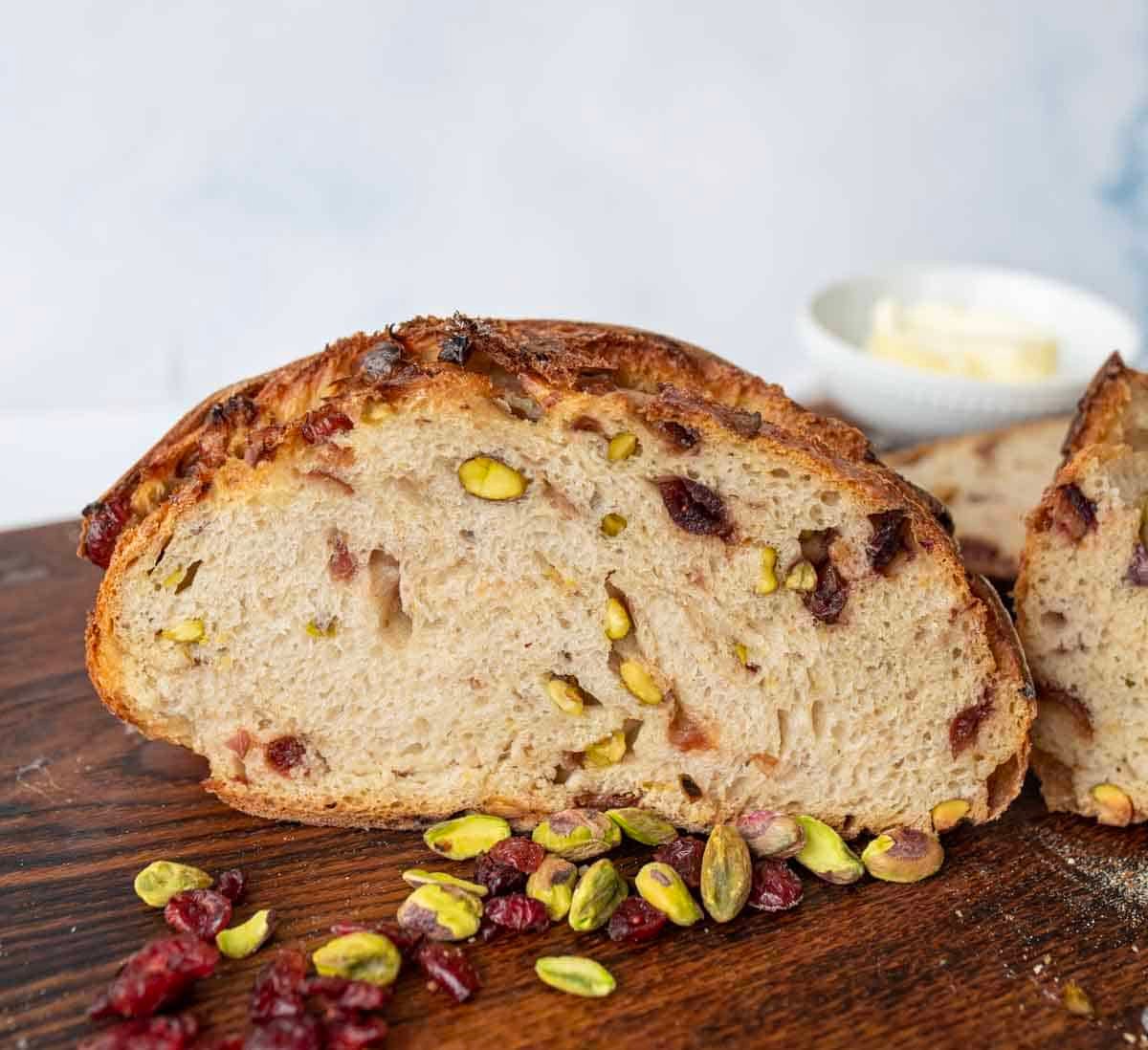
I like how this recipe balances practicality with wow-factor. Yes, it requires an overnight (or at least 8-hours) rise, but most of that time is hands-off. The actual work is maybe 20 minutes of active effort. The result is a bakery-worthy loaf with a deep mahogany crust and a tender, flavorful crumb that never fails to impress.
🩷 Melissa
The technique of soaking the cranberries and pistachios in fresh orange juice before adding them to the dough is brilliant.
It prevents the fruit from absorbing too much moisture from the dough during the rise, and it infuses every bite with citrus brightness.
Plus, the pistachios add this wonderful earthy crunch that contrasts beautifully with the chewy cranberries. This loaf combines some of my favorites—orange, cranberry, pistachios—and all in a sourdough loaf!
Ingredient Notes
Dried Cranberries: Use the sweetened variety—unsweetened cranberries are quite tart and can overpower the other flavors. Avoid using fresh cranberries as they contain too much moisture.
Pistachios: Raw, unsalted pistachios are ideal, but roasted ones add a deeper, nuttier flavor that’s equally delightful. If using salted pistachios, reduce the salt in the dough by half to prevent over-salting.
Orange: Use a large, fresh orange with bright, unblemished skin. You’ll need both the zest and juice. Organic oranges are preferable if you’re using the zest since you want to avoid any waxy coating.
Whole Wheat Flour: This adds a subtle nutty complexity that complements the nuts and fruit. If you don’t have it, you can substitute with bread flour or additional all-purpose flour—the loaf will still turn out beautifully.
See the recipe card below for full information on ingredients and quantities.
Orange Cranberry Sourdough Bread with Pistachios
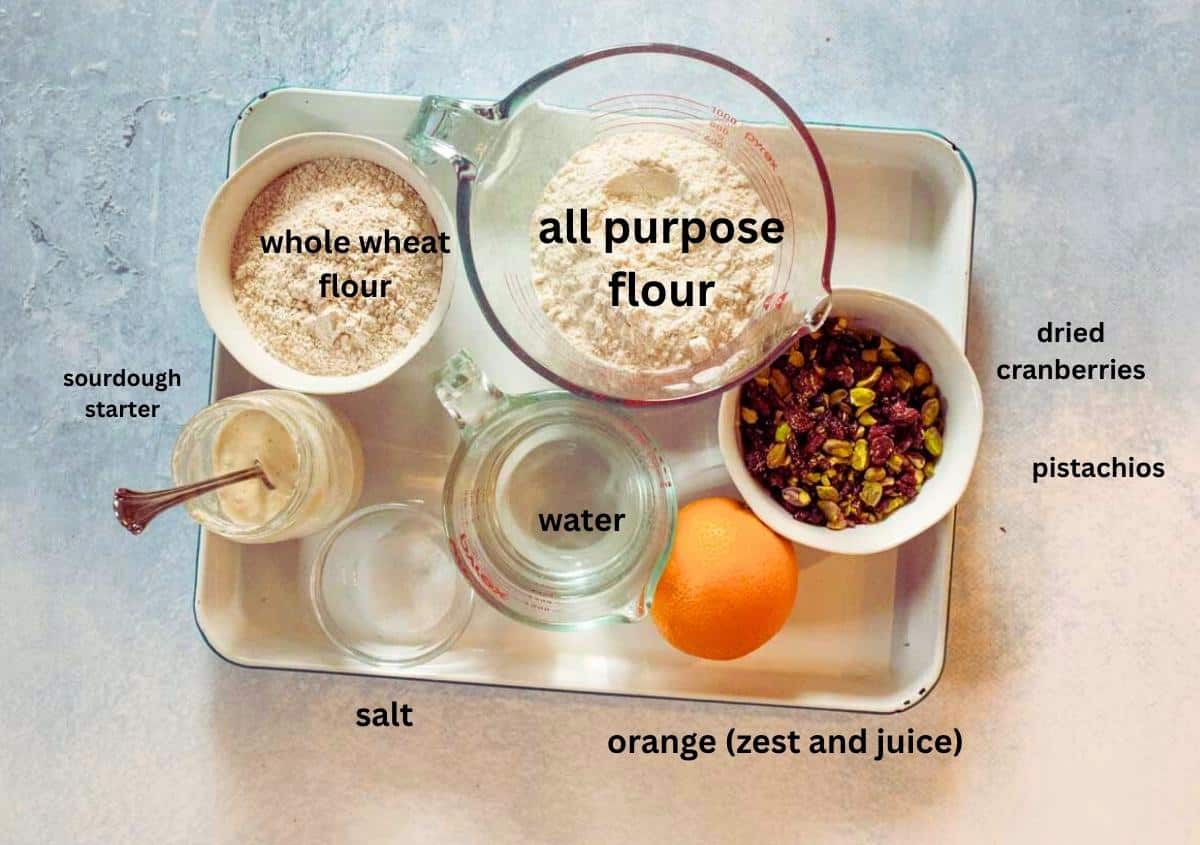
Ingredients
- 50 g active bubbly starter, ¼ cup
- 350 g water, 1 ⅓ cups plus 2 tablespoons
- 150 g whole wheat flour, 1 cup plus 2 tablespoons
- 350 g all-purpose flour, 2 ⅔ cups
- 10 g fine sea salt, 1 ½ tsp
- 75 g chopped dried sweetened cranberries, ½ cup
- 75 g chopped pistachios, ¾ cup
- 1 large orange, zest and juice
Instructions
- Make the dough by adding the starter and the water to a large bowl. Use a fork to whisk them together well.50 g active bubbly starter, 350 g water
- Add the whole wheat flour, all-purpose flour, and salt, and use the fork to combine well. Stir until the mixture comes together into a rough dough and you’ve incorporated the flour well. You can finish mixing by hand to incorporate all of the flour as needed.150 g whole wheat flour, 350 g all-purpose flour, 10 g fine sea salt
- Cover the bowl with a clean, damp kitchen towel, and let the dough rest for 30-90 minutes, depending on your schedule.
- While the dough is resting, feed your starter, and store it according to your preference.
- Add the chopped dried cranberries and pistachios to a small bowl and add 30-45 grams (roughly 2-3 tablespoons of juice from half a large orange), and the orange zest to the bowl and stir to combine. Let this rest while the dough rest.75 g chopped dried sweetened cranberries, 75 g chopped pistachios, 1 large orange
- After the dough has rested the first 30-90 minutes, add the dried cranberries mixture to the bowl, and use your hands to gently pull the edge of the dough from the side of the bowl and push it down into the middle of the bowl. Do this, rotating around the bowl, until the dough starts to look smooth and comes together in more of a ball. This should take about a minute of going around the bowl 4-5 times, pulling and tucking into the center. This will evenly incorporate the fruit and nuts as well.
- Cover the bowl with your damp towel, a lid, or plastic wrap, and allow the dough to rest for 8-18 hours at room temperature, about 70℉ (21℃). The dough will be slightly risen and puffy.
- After the bulk rise, gently remove the dough from the bowl onto a lightly floured surface. Tuck the edges of the dough into the center and work around the edges until you’ve tucked them all in. Flip the dough ball over. Let the dough rest for 5-10 minutes.
- Using your hands, cup the side of the dough farthest from you, pinkies against the counter, and gently pull the dough ball towards you, letting its grip on the counter pull it into a tighter ball. Rotate the dough slightly, and repeat around the edges until you’ve formed a tight ball.
- Prepare a bread proofing basket by dusting it well with flour.
- Place your dough ball, smooth top down, into your prepared basket, and cover with a damp towel.
- Let the dough rest for 2-4 hours, at room temperature, or until it’s spread out a bit and looks puffy. It will not double in size but should near the top of the proofing basket.
- Preheat your oven to 425℉ (218℃).
- Gently turn your bread dough out onto a piece of parchment paper. With your hand, gently spread out any flour that has accumulated on top of the dough.
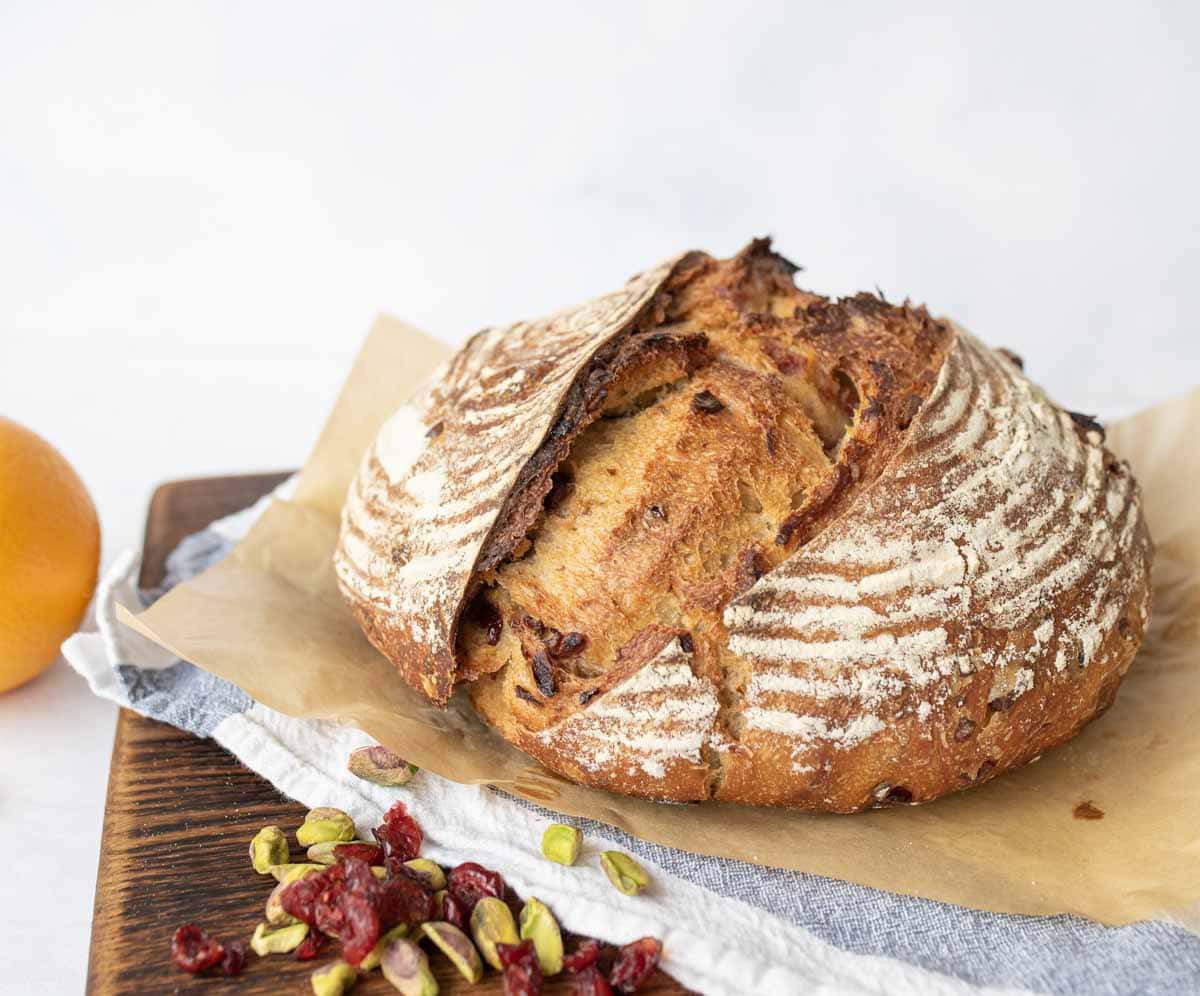
- Score the top of the loaf in a pattern of your choosing or simply make a long slash down the middle.
- Use the corners of the parchment paper to lift the dough into your dutch oven. Place the lid on the dutch oven.
- Place the dutch oven in the hot oven, and cook for 30 minutes.
- Remove the lid, and return the dutch oven to the oven, uncovered, for another 20-30 minutes.
- When done, the bread will be dark and sound hollow when tapped.
- Remove the pan from the oven, and then remove the bread from the pan, and let it cool on a wire rack for 1 hour before slicing and serving.
- Sourdough bread is best eaten the day of, though leftovers make great toast.
Notes
- If you’d like more of an orange flavor, you can add the zest of a second orange when you add the zest of the first.
- Chop up the fruit and nuts well so that they don’t weigh down your dough.
- I used raw pistachios because that is what I could find but I do think this would be delightful with roasted and/or roasted and salt pistachios, that shouldn’t be an issues.
- You don’t have to use whole wheat flour here if you don’t have it on hand. Using just all-purpose or using just bread flour will also work great. I just like the little bit of a rustic taste with the nuts and fruit.
Nutrition
How To Make Cranberry Sourdough Bread
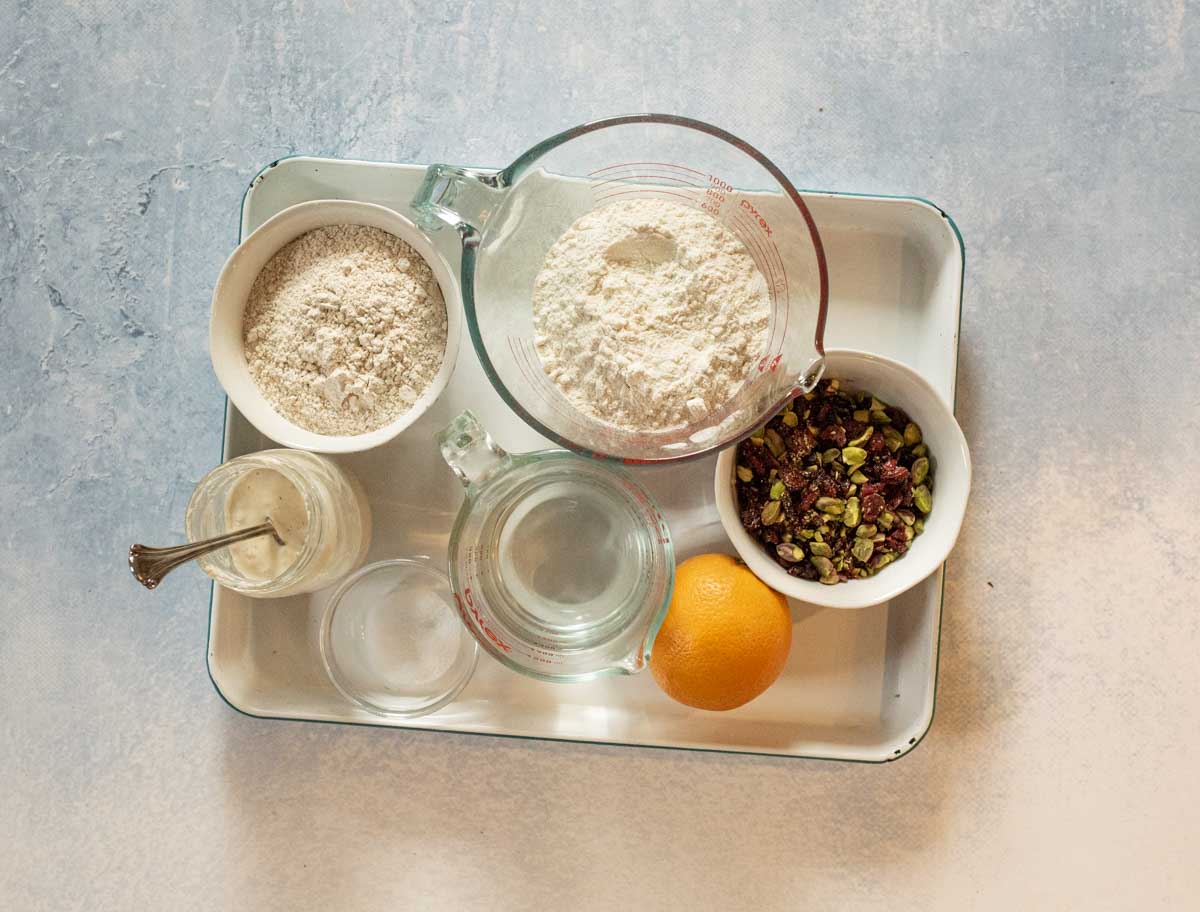
Step 1: Whisk your active, bubbly sourdough starter with water in a large bowl until well combined. Add the whole wheat flour, all-purpose flour, and salt, stirring with a fork until a shaggy dough forms. Cover and let rest for 30-90 minutes while you prepare the fruit mixture.
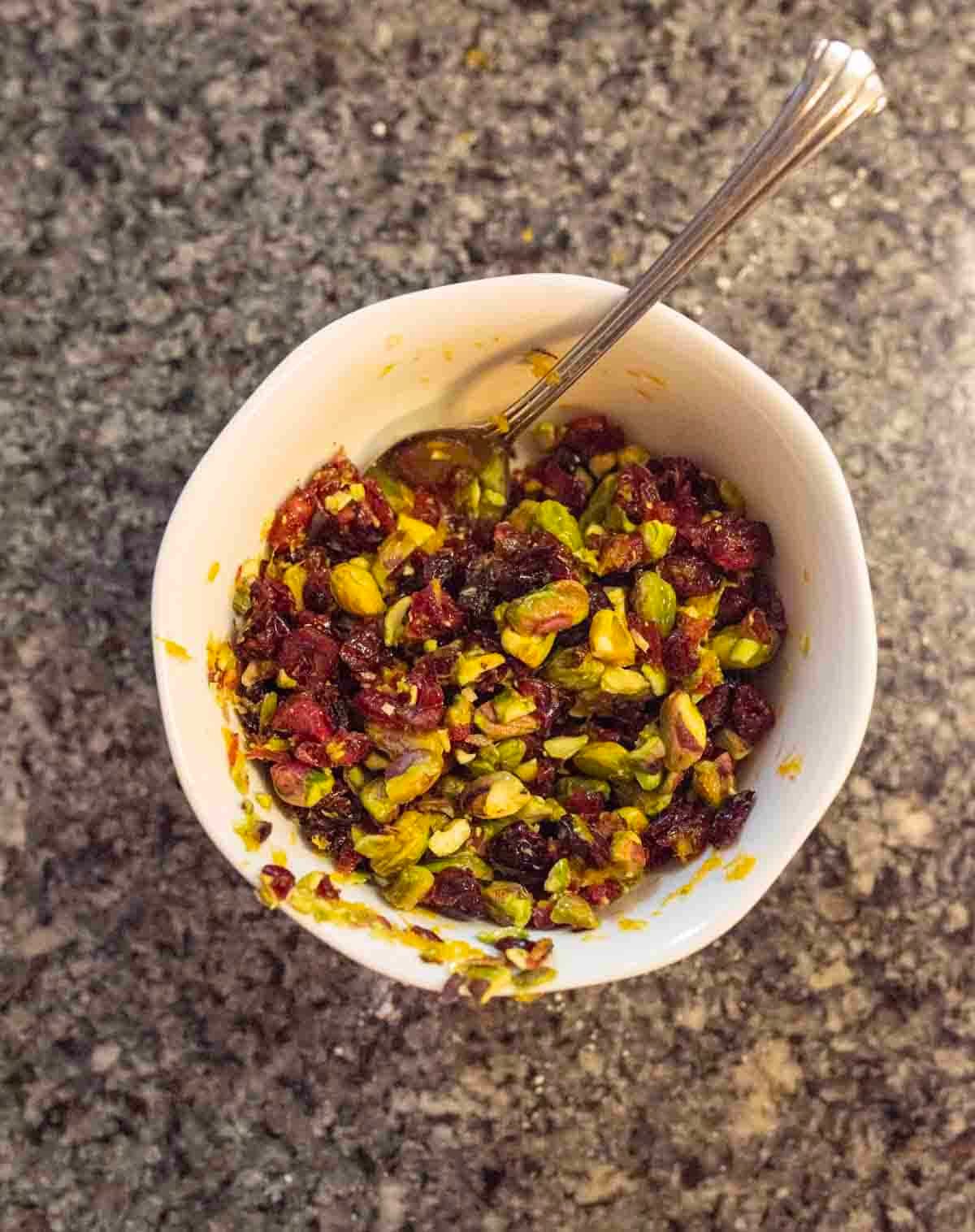
Step 2: Chop the dried cranberries and pistachios into small, uniform pieces. Combine them in a bowl with fresh orange juice (2-3 tablespoons) and the zest from one orange. Let this mixture sit while the dough rests—the juice softens the cranberries and infuses everything with citrus flavor.
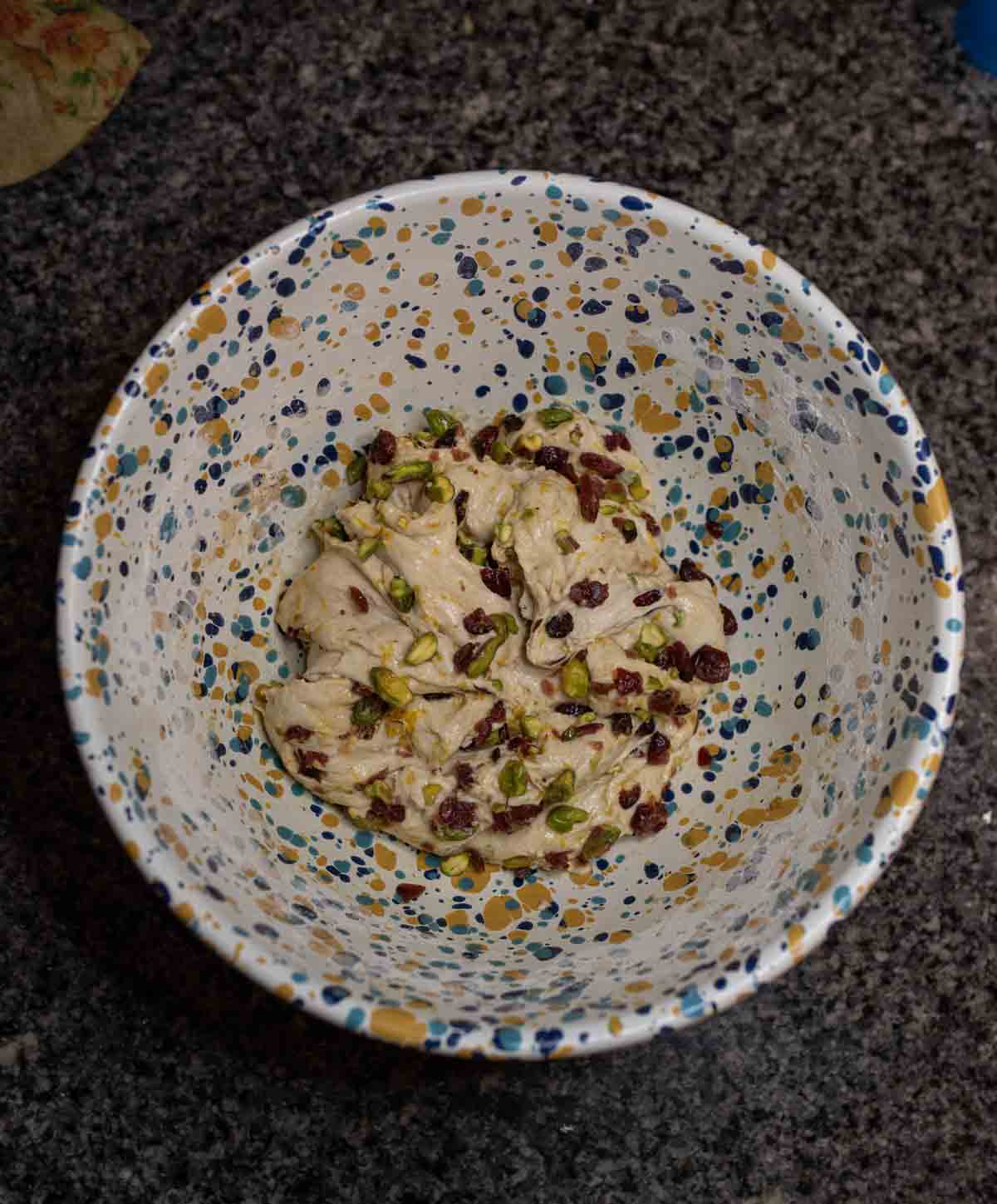
Step 3: After the dough has rested, add the soaked fruit mixture. Use your hands to gently fold the dough: pull one edge up from the side of the bowl and tuck it into the center. Rotate the bowl and repeat until the fruit and nuts are evenly distributed and the dough becomes smooth (about 1 minute). Cover and let rise 8-18 hours at room temperature until puffy.
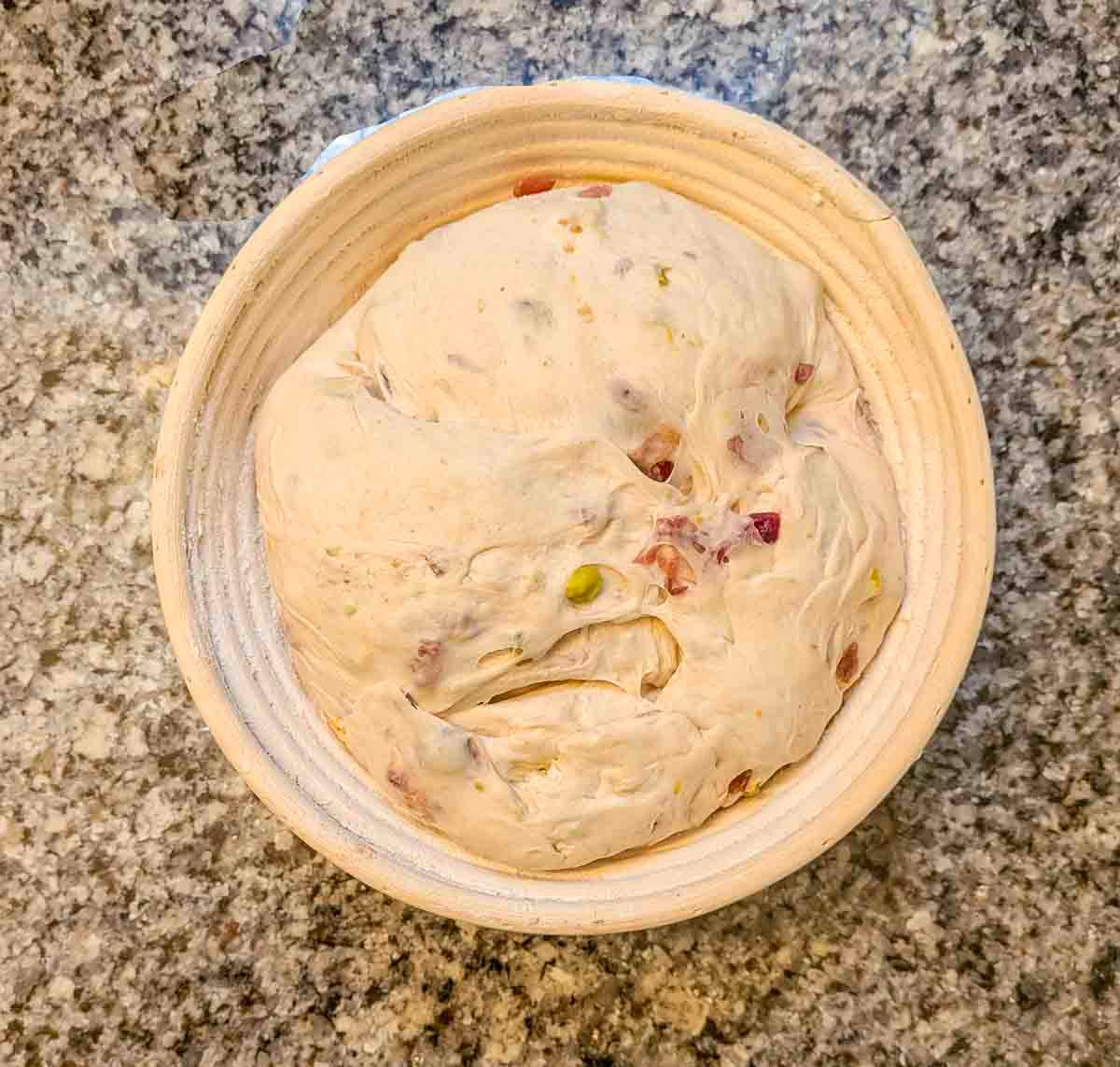
Step 4: Turn the risen dough onto a lightly floured surface. Gently fold the edges toward the center, flip over, and let rest 5-10 minutes. Shape into a tight ball by cupping your hands around the dough and pulling it toward you. Place smooth-side down into a well-floured proofing basket, cover, and let proof 2-4 hours until puffy.
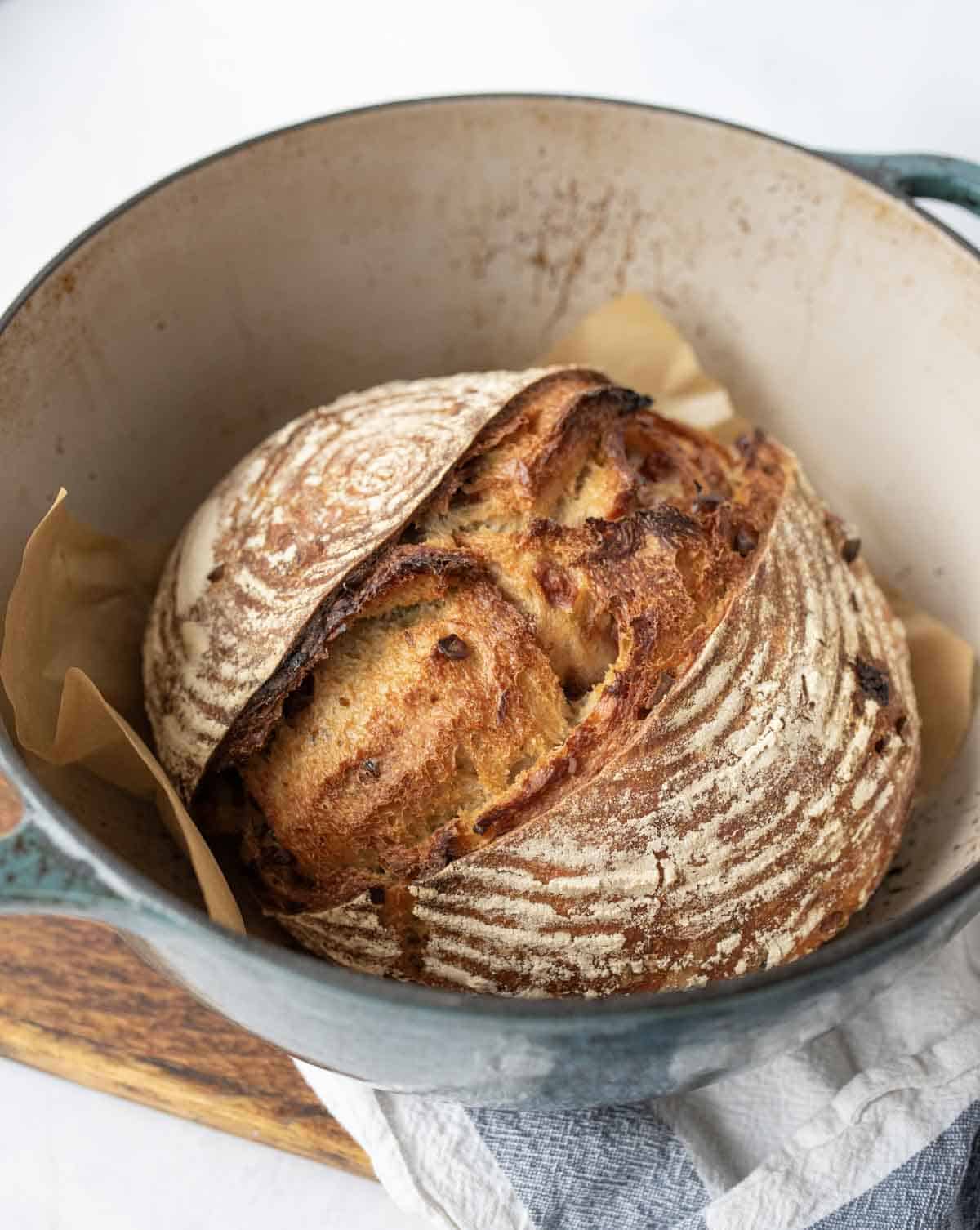
Step 5: Preheat your oven to 425°F with your dutch oven inside. Turn the dough onto parchment paper, gently brush off excess flour, and score the top with your preferred pattern. Use the parchment corners to lift the dough into your hot dutch oven and cover with the lid.
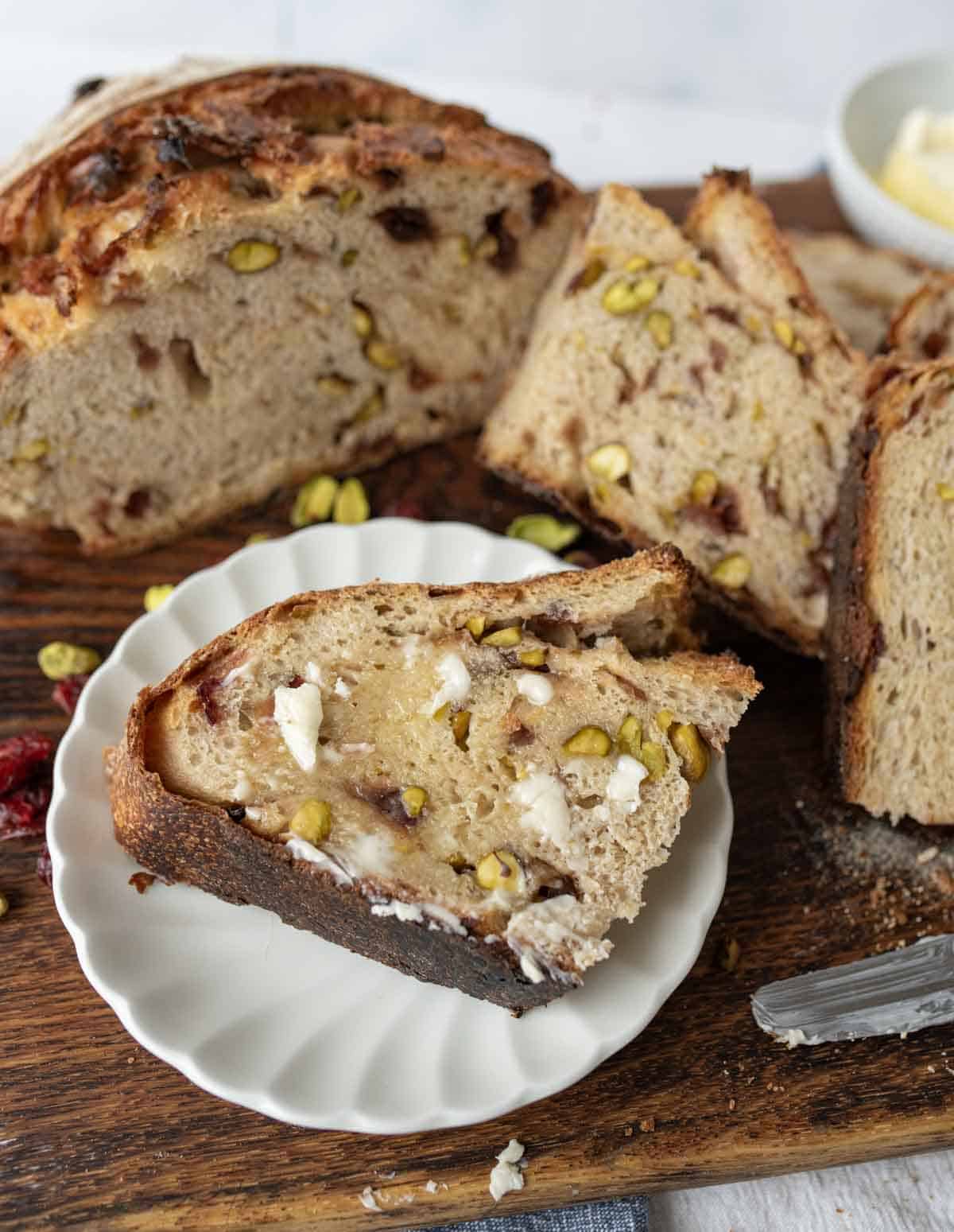
Step 6: Bake covered for 30 minutes, then remove the lid and continue baking 20-30 minutes until the crust is deep brown and sounds hollow when tapped. Transfer to a wire rack and resist the urge to slice for at least one hour—this waiting period lets the interior fully set.
Substitutions & Variations For Cranberry Sourdough Bread
Dried Fruit
Swap the cranberries for dried cherries, chopped apricots, or golden raisins. You could even use a combination—try 50g cranberries and 25g chopped dates for added sweetness.
Nuts
Walnuts or pecans work wonderfully in place of pistachios. Almonds are another great option. For nut-free, try pumpkin seeds or sunflower seeds for that satisfying crunch.
Citrus Variations
Replace the orange with lemon for a brighter, more pronounced citrus note, or use a combination of orange and lemon for complexity. Lime would also be interesting for a more tropical twist.
Cheese Addition
For a savory-sweet combination, fold in 50-75g of crumbled goat cheese or blue cheese along with the fruit and nuts. The tangy cheese pairs beautifully with the sweet cranberries.
Spice It Up
Add 1 teaspoon of cinnamon or ½ teaspoon of cardamom to the dough for warm, aromatic notes that enhance the holiday feel.
Make It Vegan
This recipe is already naturally vegan! Just ensure your dried cranberries don’t contain any honey or other animal products.
FAQs for Cranberry Orange Sourdough Bread
Nope, not this time! Fresh cranberries contain too much moisture and will make your dough soggy. Stick with dried sweetened cranberries for the best texture and flavor balance. If you can only find unsweetened dried cranberries, they’ll work but will give you a more tart loaf.
While a proofing basket helps create that beautiful artisan look with flour patterns on the crust, you can use a mixing bowl lined with a well-floured kitchen towel as an alternative. Just make sure to dust it generously with flour to prevent sticking.
The added fruit and nuts, especially when soaked in orange juice, introduce extra moisture to the dough. This is normal. The dough should still come together during the folding process. If it’s excessively sticky, you can lightly flour your hands while working with it.
A dutch oven creates the perfect steamy environment for a crusty exterior, but you can bake it on a baking sheet. Place a shallow pan with water on the oven’s bottom rack to create steam, and expect a slightly different crust texture—still delicious, just less dramatically crispy.
Your starter should be active and bubbly, having doubled in size within 4-6 hours of feeding. It should smell pleasantly tangy and pass the float test: drop a small spoonful in water, and if it floats, it’s ready to bake with.
My Best Tips for Making Cranberry Sourdough Bread
☞ Chop your additions finely: Large chunks of cranberries and pistachios can weigh down your dough and prevent proper rise. Aim for pieces no larger than a pea. The smaller pieces distribute more evenly throughout the loaf and won’t create air pockets or dense spots.
☞ Watch your ambient temperature: Sourdough is temperature-sensitive. If your kitchen is warmer than 70°F, your bulk rise will happen faster—sometimes in as little as 6 hours. In cooler homes, you might need the full 18 hours. Look for a puffy, slightly risen dough rather than relying solely on the clock.
☞ Don’t skip the initial rest period: That 30-90 minute autolyse (rest period) after mixing the flour and water allows the flour to fully hydrate and makes the dough much easier to work with. It also develops better flavor and texture with minimal effort.
☞ Perfect your scoring technique: Use a very sharp blade or razor and make one confident, swift cut about half an inch deep. A dull knife will drag and tear the dough. That scored pattern isn’t just decorative—it controls where the bread expands in the oven.
☞ Let it cool completely before slicing: I know the temptation is real, but cutting into hot bread releases all that precious steam and can make the interior gummy. Give it a full hour on the cooling rack. The texture will be infinitely better, and the flavors will have time to fully develop.
What to Serve With Cranberry Sourdough Bread
This festive loaf shines at brunch tables and holiday gatherings. Serve it sliced with soft butter or cream cheese, or try a sharp white cheddar for a savory contrast to the sweet cranberries. It makes incredible French toast—the fruit adds natural sweetness that caramelizes beautifully in the pan.
For cheese boards, pair it with creamy brie, tangy goat cheese, or aged gruyere. The pistachios and cranberries complement most soft cheeses wonderfully. Add some honey or fig jam on the side for an elegant appetizer spread.
It’s perfect alongside soups and stews during colder months—the hearty texture holds up well for dipping. Try it with butternut squash soup or a rich beef stew. The orange notes in the bread brighten up any hearty, warming meal.
For breakfast, toast thick slices and top with almond butter and a drizzle of honey, or serve warm with scrambled eggs and fresh fruit. The possibilities are endless, but honestly, a thick slice with good butter and a hot cup of coffee is hard to beat.
Storage, Reheating & Make-Ahead Tips For Cranberry Orange Sourdough Bread
Room Temperature
Store your cooled loaf wrapped in a clean kitchen towel or paper bag for up to 2 days. Avoid plastic bags, which trap moisture and make the crust soft. The bread will stay fresh but the crust will gradually soften.
Refrigerator Storage
Not recommended for this bread—refrigeration accelerates staling and makes the texture dry and crumbly. If you need longer storage, freezing is a much better option.
Freezer Storage
Slice the completely cooled loaf and wrap individual slices (or the whole loaf) tightly in plastic wrap, then aluminum foil. Freeze for up to 3 months. Thaw slices at room temperature for 30 minutes or pop frozen slices directly into the toaster.
Reheating
For the best texture, refresh day-old bread in a 350°F oven for 10 minutes. This re-crisps the crust beautifully. Individual slices toast perfectly straight from frozen—no thawing needed.
Make-Ahead Tip
You can prepare the dough through the bulk rise, then refrigerate it overnight instead of the final proof. The next day, shape it cold, let it come to room temperature during the final proof (this will take 3-4 hours), then bake as directed.
Serving Leftovers
Day-old cranberry sourdough makes exceptional bread pudding or French toast. The dried fruit adds natural sweetness and the sturdy texture holds up beautifully when soaked in custard. It’s also wonderful cubed and toasted for croutons in fall salads.
Similar Yummy Sourdough Recipes
- Cinnamon Swirl Bread: Sweet sourdough with a cinnamon-sugar spiral.
- Soft & Fluffy Sourdough Challah Bread: This beautifully braided loaf has a tender, slightly sweet crumb and a gorgeous golden crust.
- Chocolate Chip Sourdough Bread: A literal match made in heaven, even if it is a little unexpected.
- Sourdough Banana Bread: Uses sourdough starter or sourdough discard in addition to classic banana bread ingredients.
More Comforting Sourdough Recipes To Try
French Toast Recipes
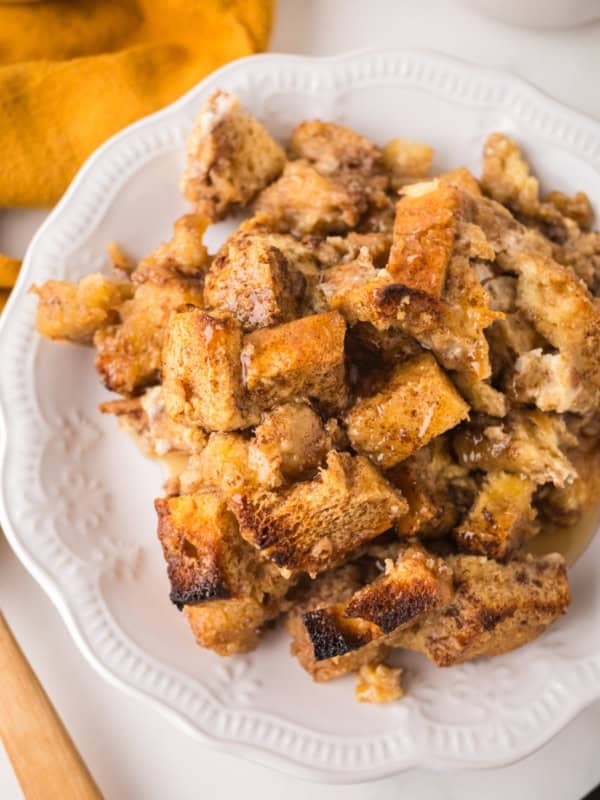
Sourdough French Toast Casserole

French Toast Recipes
Sourdough French Toast in 15 Minutes
Sourdough Recipes
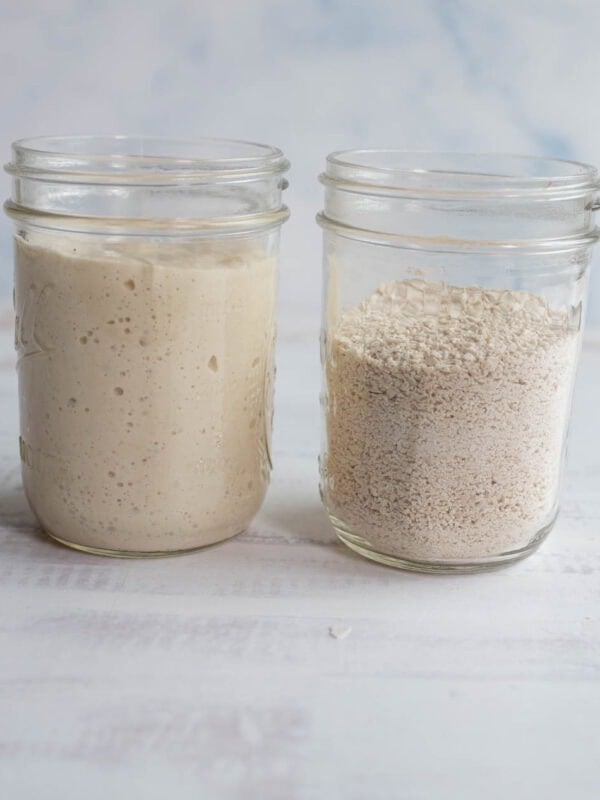
How to Rehydrate Sourdough Starter
Sourdough Recipes
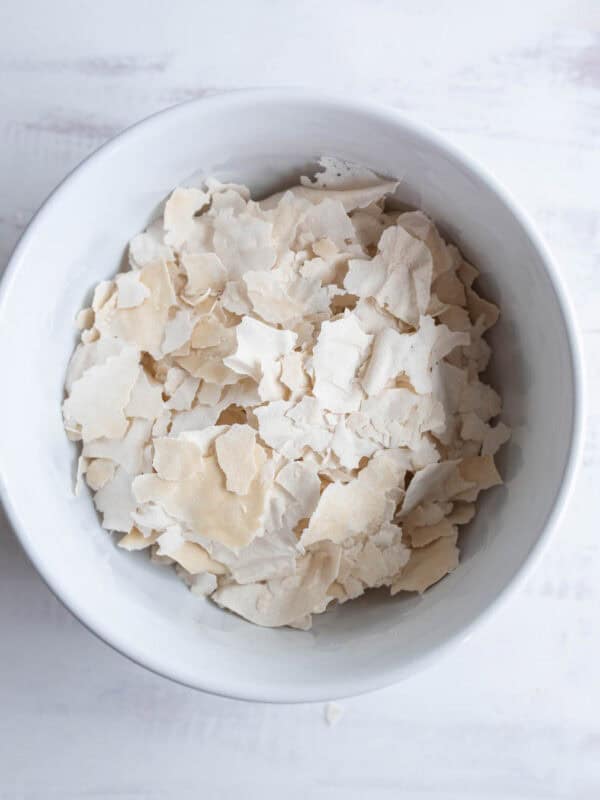
How to Dehydrate Sourdough Starter
Did you make this recipe? Leave a ⭐️ review and share it on Instagram, Facebook, or Pinterest!